Frame Size Guide
Buying eyeglasses online can feel unfamiliar if you are used to trying on frames at a local optical store. However, finding the right size is easier than it may seem when you know which measurements to check.
By comparing the dimensions of a frame with a pair of glasses that already fits you well, you can shop more confidently and find a comfortable fit at Cinily Glasses.
- Frame size is based mainly on lens width, bridge width, and temple length, such as 52-17-140.
- Overall frame width helps you compare a new frame with glasses that already fit you comfortably.
- PD, or pupillary distance, helps position the optical center of your prescription lenses correctly.
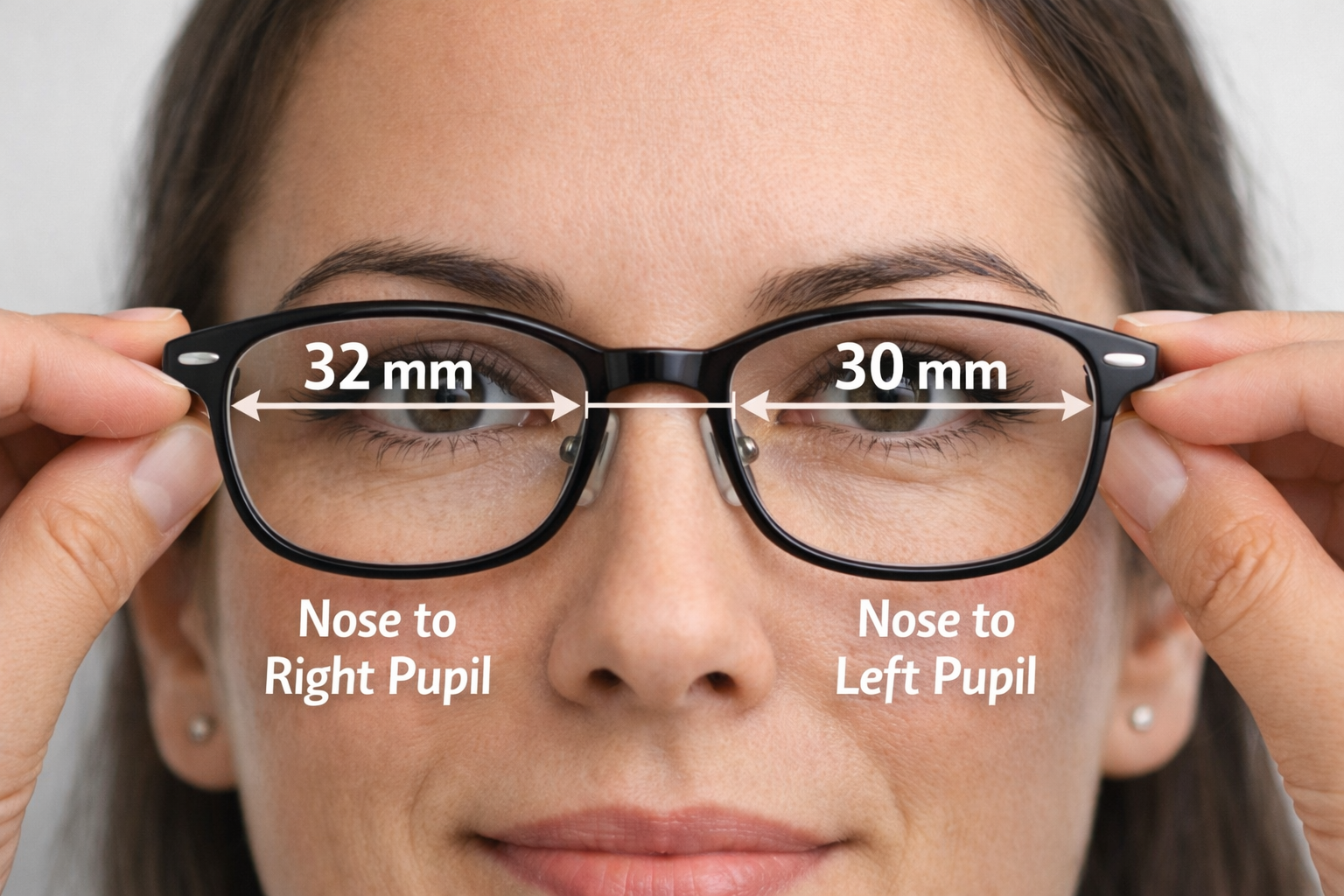
- Dual PD measures the distance from the center of your nose bridge to each pupil separately.
Download Our Free Printable PD Ruler
Do not have a millimeter ruler? Download and print our free PD ruler before measuring your pupillary distance at home.
- Choose “Actual Size” or set the print scale to 100%.
- Do not select “Fit to Page,” “Shrink to Fit,” or any other automatic scaling option.
- Use a standard credit card to check the calibration box on the printed PDF before measuring.
- If the calibration box does not match the size of your card, correct the print settings and print the ruler again.
1) Understanding Eyeglass Frame Measurements
Eyeglass frame measurements help you understand how wide, narrow, long, or deep a frame will be. The most common measurements include:
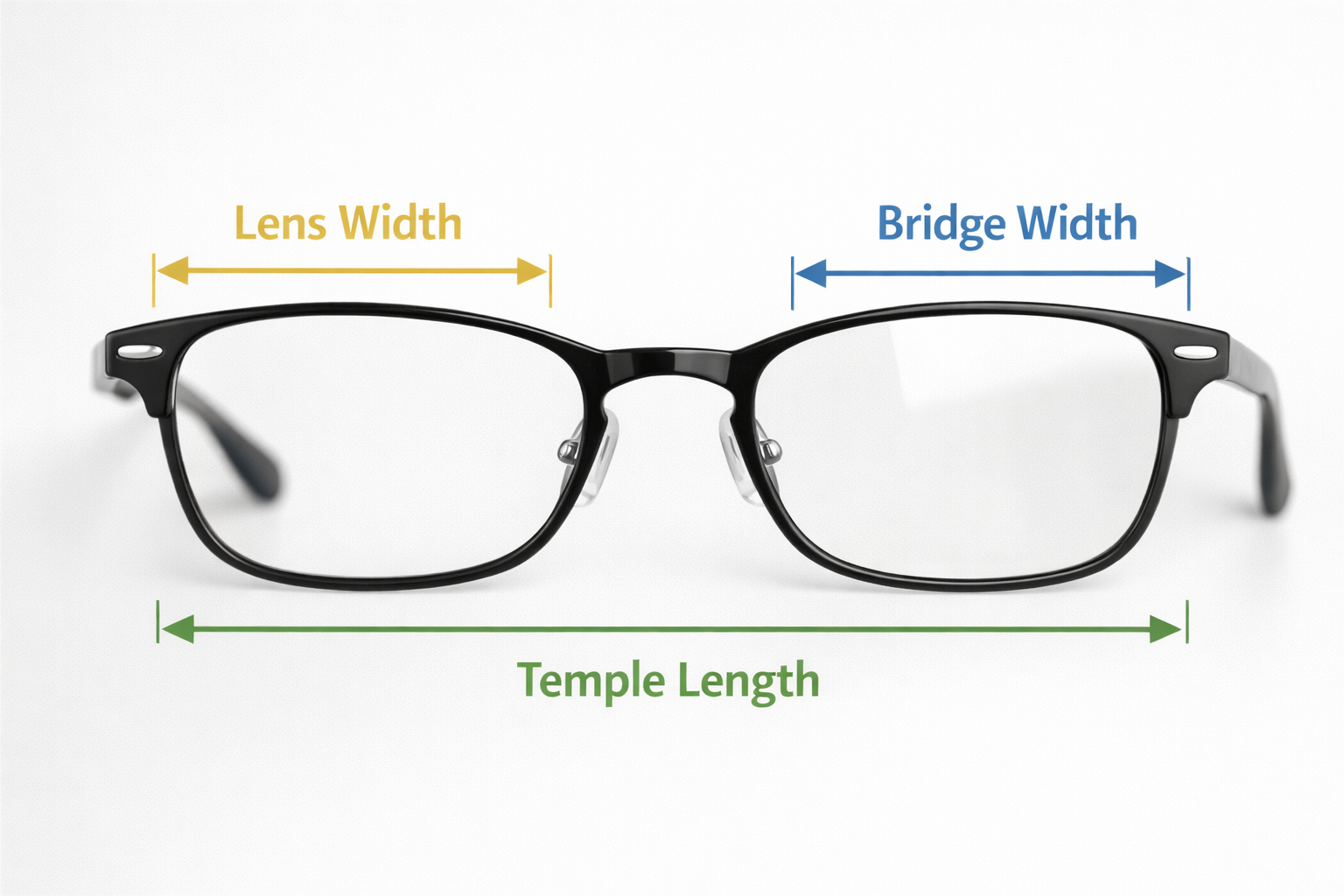
- Lens width: The horizontal width of one lens
- Bridge width: The distance between the two lenses
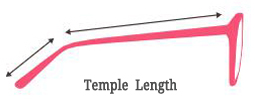
- Temple length: The length of the arm that extends toward and behind your ear
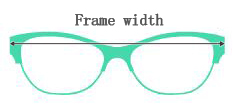
- Overall frame width: The full width of the frame from one outer edge to the other
- Lens height: The vertical height of the lens area



2) How to Find Your Glasses Measurements
A) Measure the Overall Frame Width
Overall frame width is the complete horizontal width across the front of the frame, measured from the outermost point on one side to the outermost point on the other side.
This measurement is usually not printed on your glasses, so you may need to measure it yourself with a millimeter ruler.
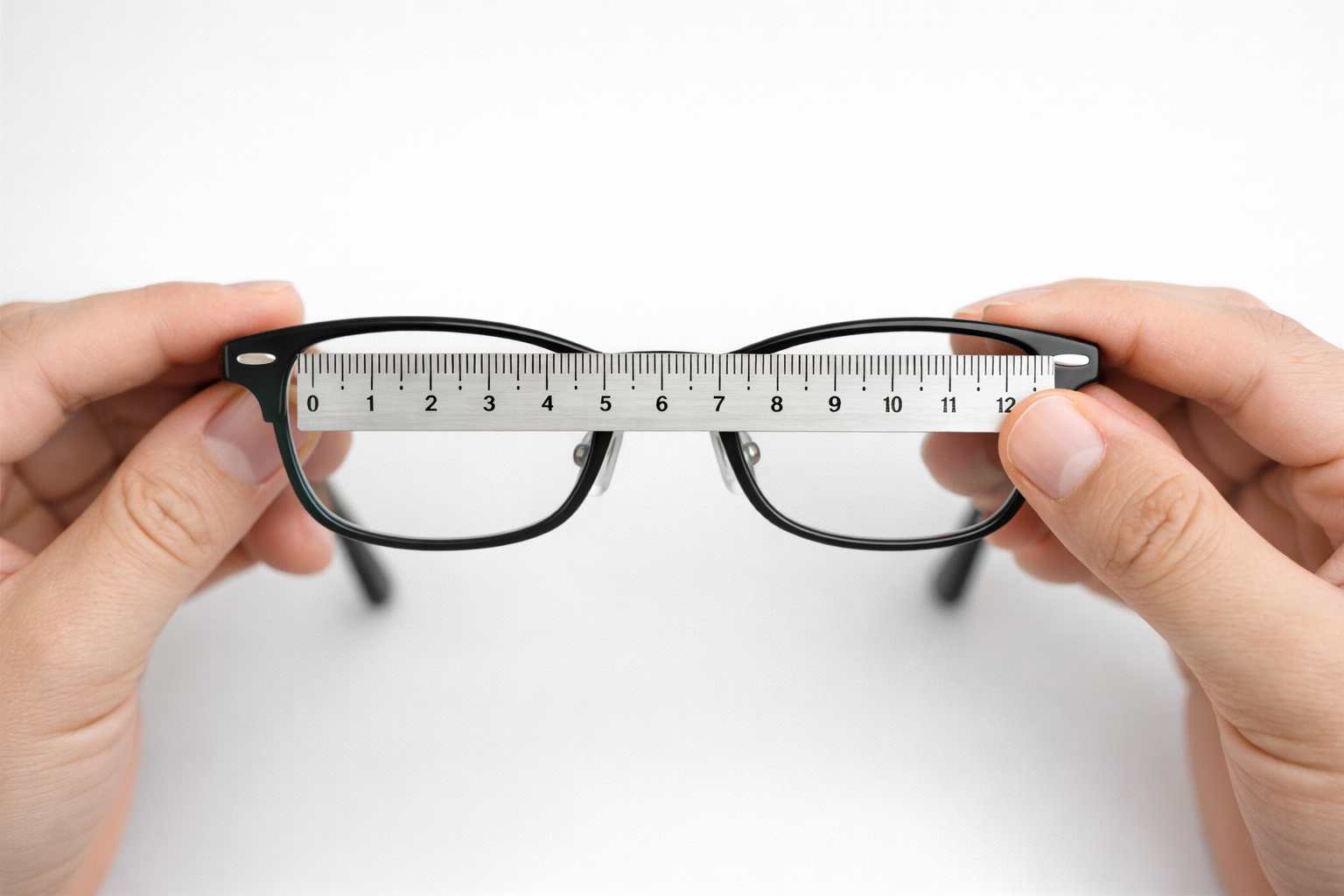
- Place your glasses face-up on a flat surface.
- Position a millimeter ruler across the front of the frame.
- Measure from the farthest outer edge on the left to the farthest outer edge on the right.
- Record the measurement in millimeters.
Compare this number with the overall width listed on the product page. A frame with a similar overall width will generally provide a similar fit, although frame shape and temple design can also affect comfort.
B) Read the Numbers Printed Inside Your Glasses
If you already own a pair of eyeglasses that fits well, check the inside of either temple arm or the bridge. You may see a size such as 52-17-140 or 52□17-140.
This usually means:
- 52 mm: Lens width
- 17 mm: Bridge width
- 140 mm: Temple length
These three measurements are helpful when comparing frames. However, because two frames with the same printed size can still have different overall widths and shapes, we also recommend comparing the overall frame width.
| Measurement | Meaning | Common Range |
|---|---|---|
| Lens Width | Horizontal width of one lens | 40–60 mm |
| Bridge Width | Distance between the two lenses | 14–24 mm |
| Temple Length | Length of the arm from the hinge toward the ear | 120–150 mm |
3) Tips for Choosing a Comfortable Frame and Lenses
For Bifocal or Progressive Lenses
For many bifocal and progressive lens designs, a frame with adequate vertical lens height is important. A lens height of approximately 35 mm or more is often a practical choice, but the exact minimum depends on the lens design, prescription, and fitting requirements.
Progressive lenses may also require an accurate monocular PD and fitting height. Contact us before ordering if you are unsure whether your selected frame is suitable.
For Stronger Prescriptions
If your SPH is approximately +6.00, -6.00, or stronger, consider a smaller frame with a lens width below approximately 50 mm. Smaller, rounder lens shapes can often help reduce visible lens thickness.
A high-index lens may also provide a thinner and lighter appearance. The best option depends on your complete prescription, including SPH, CYL, AXIS, PD, and the size and shape of your selected frame.
How to Measure Your PD at Home
Pupillary distance, commonly called PD, is the distance between the centers of your pupils. It is measured in millimeters.
An accurate PD helps position the optical center of your prescription lenses in front of your eyes for clear and comfortable vision.
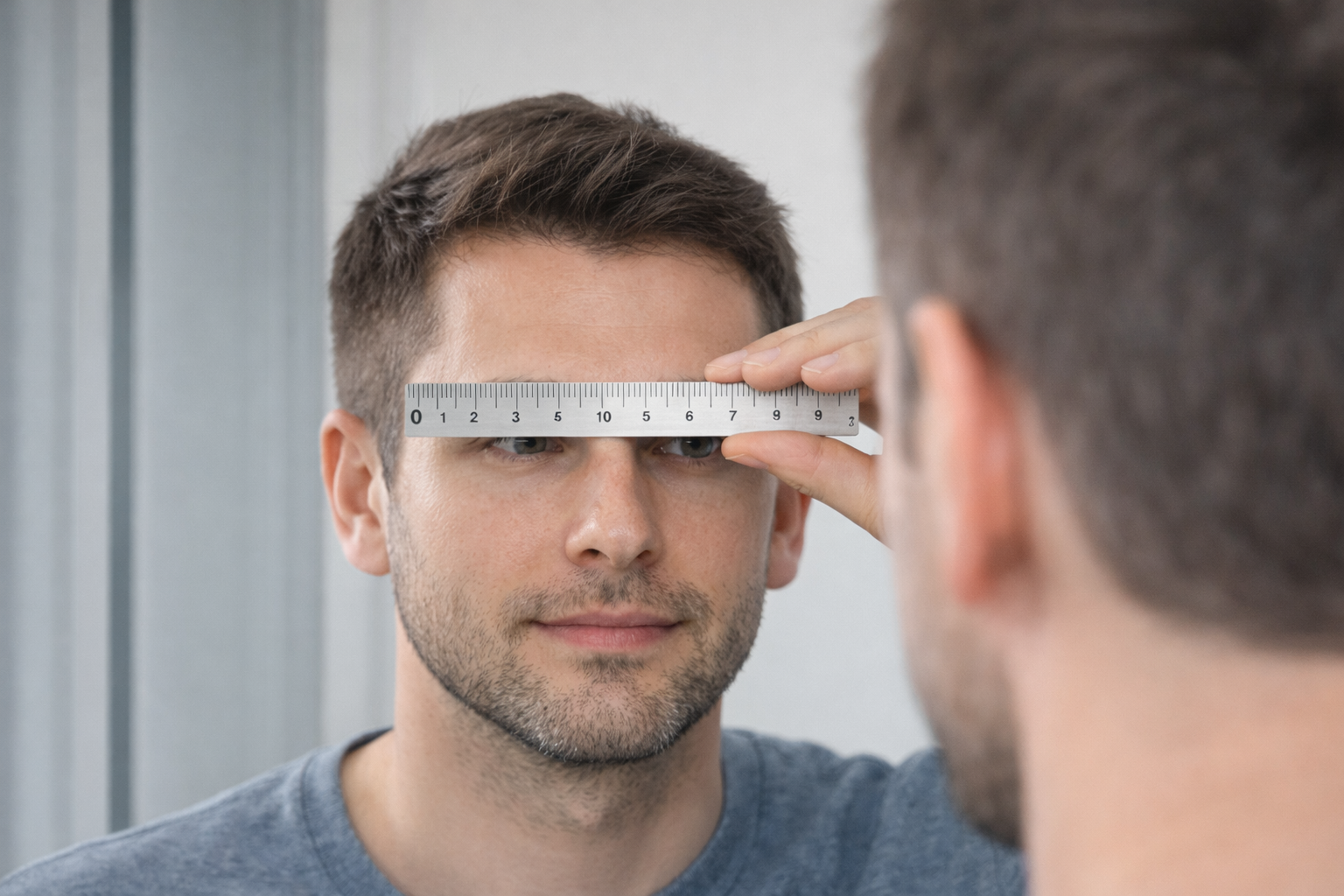
Mirror Method: Step-by-Step Instructions
- Stand approximately 8 inches or 20 centimeters away from a mirror.
- Look straight ahead and hold a millimeter ruler flat against your brow.
- Close your right eye and align the ruler’s 0 mm mark with the center of your left pupil.
- Keep the ruler still, open your right eye, and close your left eye.
- Read the millimeter mark aligned with the center of your right pupil.
- Repeat the measurement two or three times to confirm the result.
The final number is your single PD. For example, your PD may be written as 62 mm.
How to Measure Dual Pupillary Distance
Dual PD, also called monocular PD, measures each eye separately. It is written as two numbers, such as 32/30.
- Measure from the center of your nose bridge to the center of your right pupil.
- Measure from the center of your nose bridge to the center of your left pupil.
- Record the right and left measurements separately.
For example, if your right PD is 32 mm and your left PD is 30 mm, your dual PD may be written as 32/30.
Home measurement is useful when a professional PD measurement is unavailable, but it can be affected by ruler position, head movement, and viewing angle. Repeat the measurement several times and use a professionally measured PD whenever available.
Progressive or other complex prescriptions may require additional fitting measurements. Contact us before production if you are unsure.
Common Pupillary Distance Ranges
The following ranges are provided for general reference only. Do not use an estimated or average PD when your exact measurement is available.
| Group | Common PD Range |
|---|---|
| Adult Men | Approximately 54–74 mm |
| Adult Women | Approximately 52–70 mm |
| Children | Approximately 43–58 mm |
Frequently Asked Questions
How do I measure PD at home?
Stand in front of a mirror and hold a millimeter ruler across your brow. Align the 0 mm mark with the center of one pupil, then read the measurement at the center of the other pupil. Repeat the process several times to confirm your result.
How do I measure dual pupillary distance?
Measure from the center of your nose bridge to the center of your right pupil, and then measure from the center of your nose bridge to the center of your left pupil. Record the two measurements separately.
How do you measure glasses frame size?
Glasses frame size is commonly identified by lens width, bridge width, and temple length. These numbers are often printed inside the temple arm. You should also measure the overall frame width when comparing a new frame with glasses you already own.
What does a frame size such as 52-17-140 mean?
A frame size of 52-17-140 usually means the lens width is 52 mm, the bridge width is 17 mm, and the temple length is 140 mm.
How do you measure spectacles size?
“Spectacles size” is another term for eyeglass frame size. Measure or compare the lens width, bridge width, temple length, lens height, and overall frame width.
Can I use an average PD when ordering prescription lenses?
Using your exact PD is recommended. Average ranges are only general references and should not replace an available professional or carefully measured PD.
Find Your Next Pair at Cinily Glasses
Once you know your frame measurements and PD, compare them with the dimensions shown on the product page before placing your order.
Shop Eyeglass Frames → Explore Lens Options →
Need help? Email your prescription, current frame measurements, and selected frame link to service@cinilyglasses.com. Our team will help you review the available frame and lens options before production.